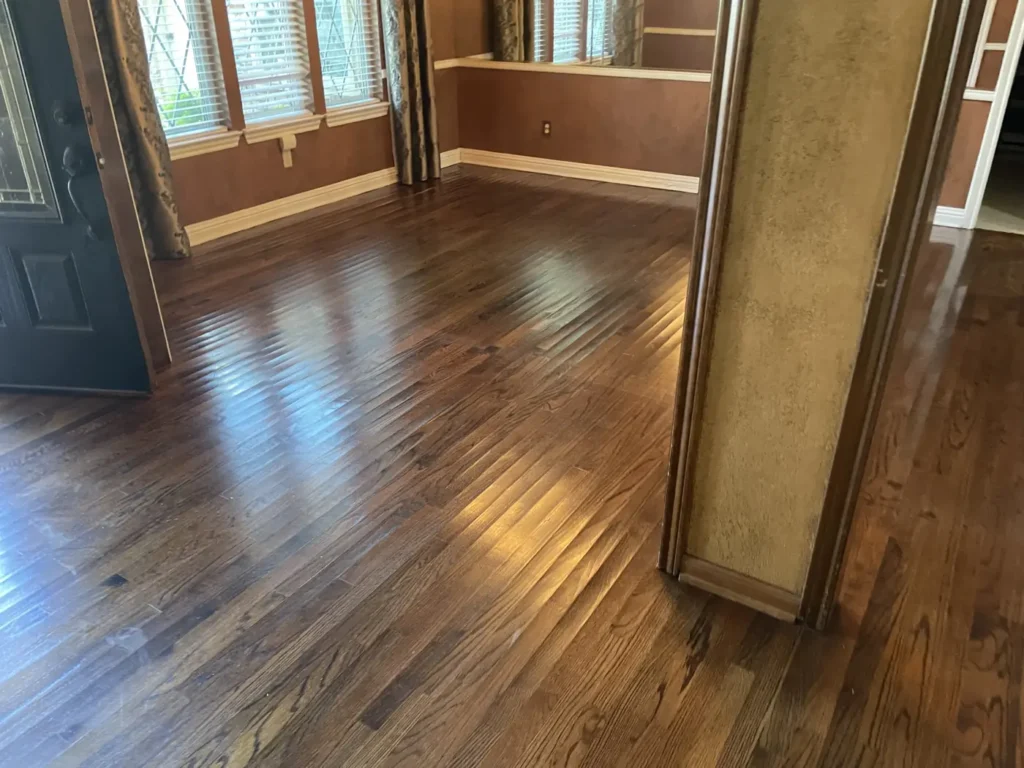
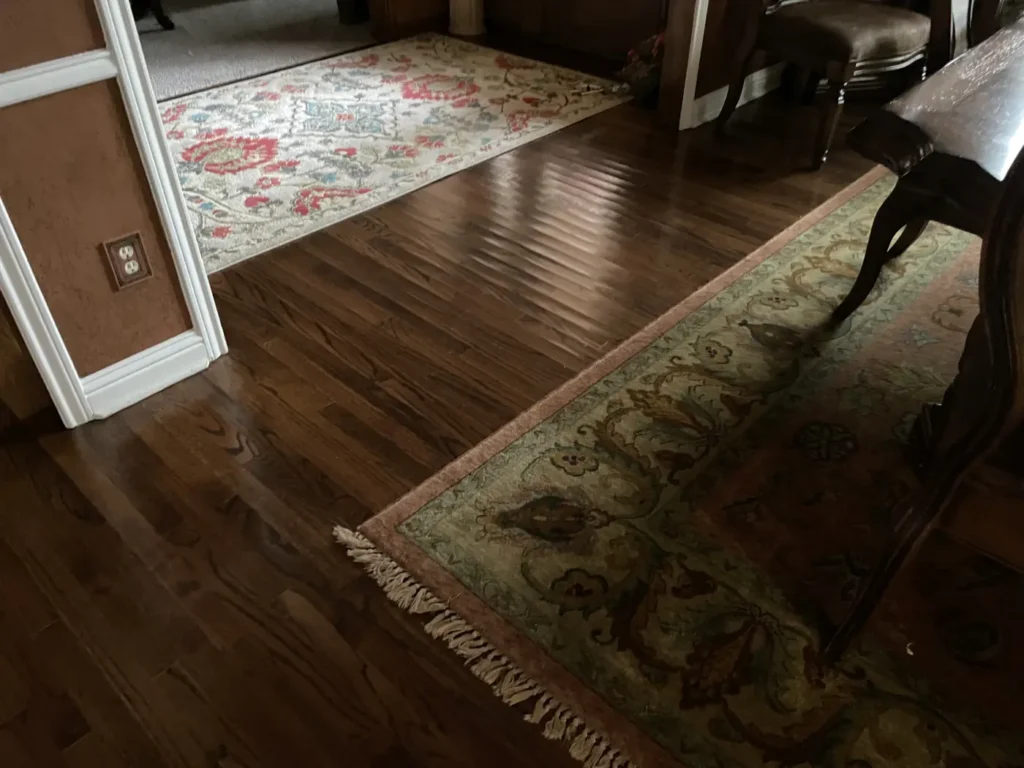
The oak hardwood floors in this McKinney home ran through the entry, dining room and study. Years of traffic had worn the old dark finish dull and patchy, especially in the walkways. Solid hardwood can be sanded and refinished several times in its life, so this is the kind of floor you restore, not replace. These photos follow the job from the old finish to bare wood and stain selection.
Project at a glance
- Location: McKinney, TX (Collin County)
- Floor: Solid oak hardwood through the entry, dining room and study
- Scope: Sand to bare wood, stain samples on site, new stain and finish
- Timeline: Walkthrough August 2021; sanding late September; stain samples early October 2021
Before: a worn dark finish
Sanding to bare wood
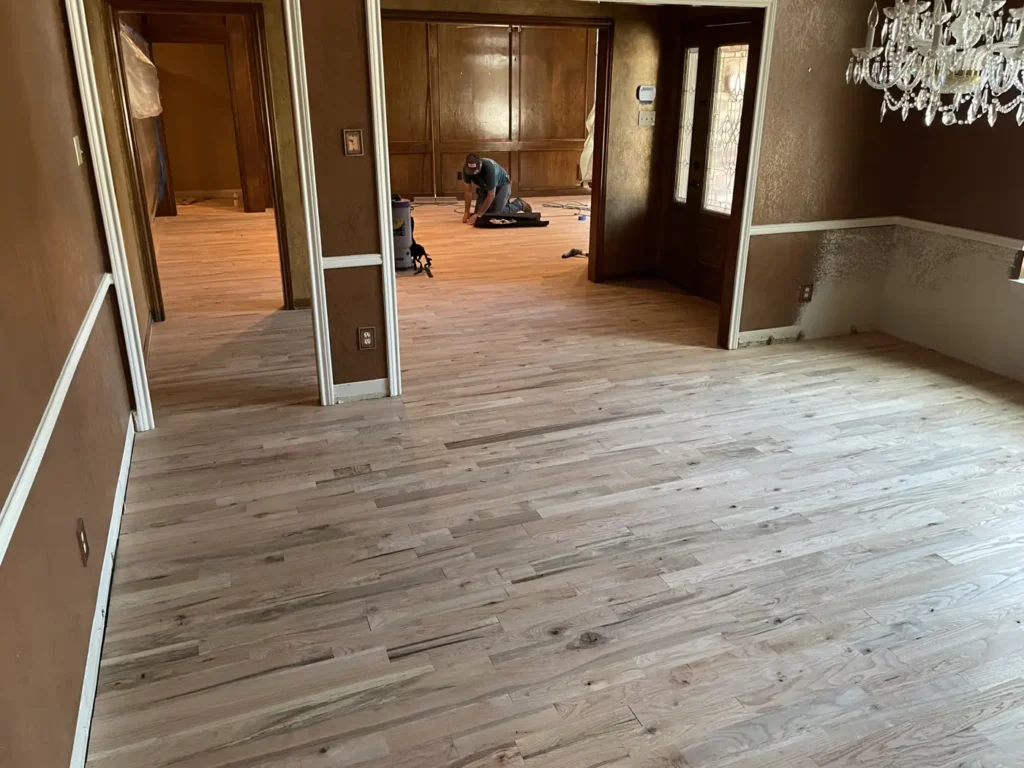
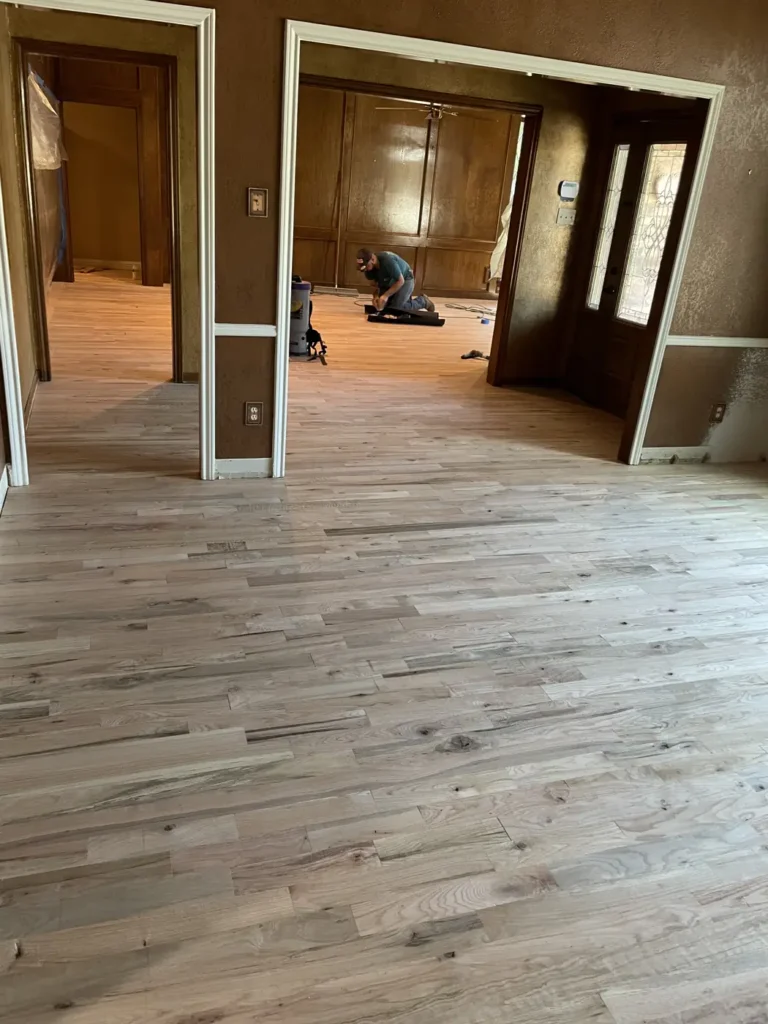
Our crew sanded the floors down past the old stain and finish to clean, raw oak. Sanding all the way down is what gets you an even color at the end. If old finish is left in some spots and not others, the new stain soaks in unevenly and the floor looks blotchy.
Testing stain on the actual floor
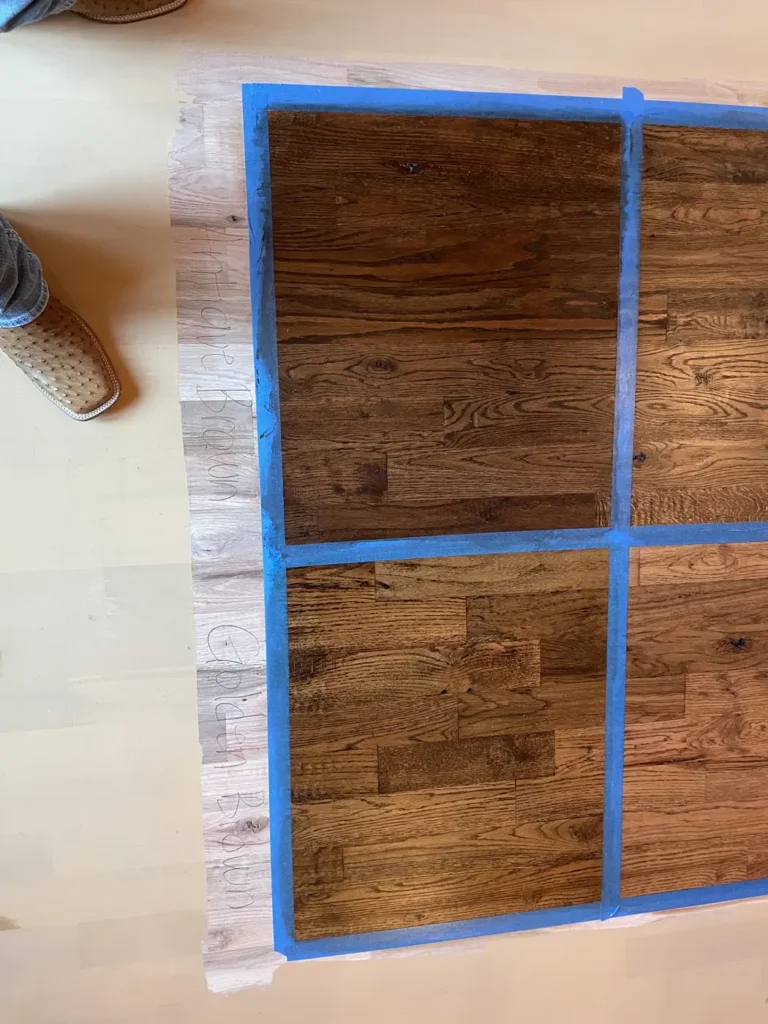
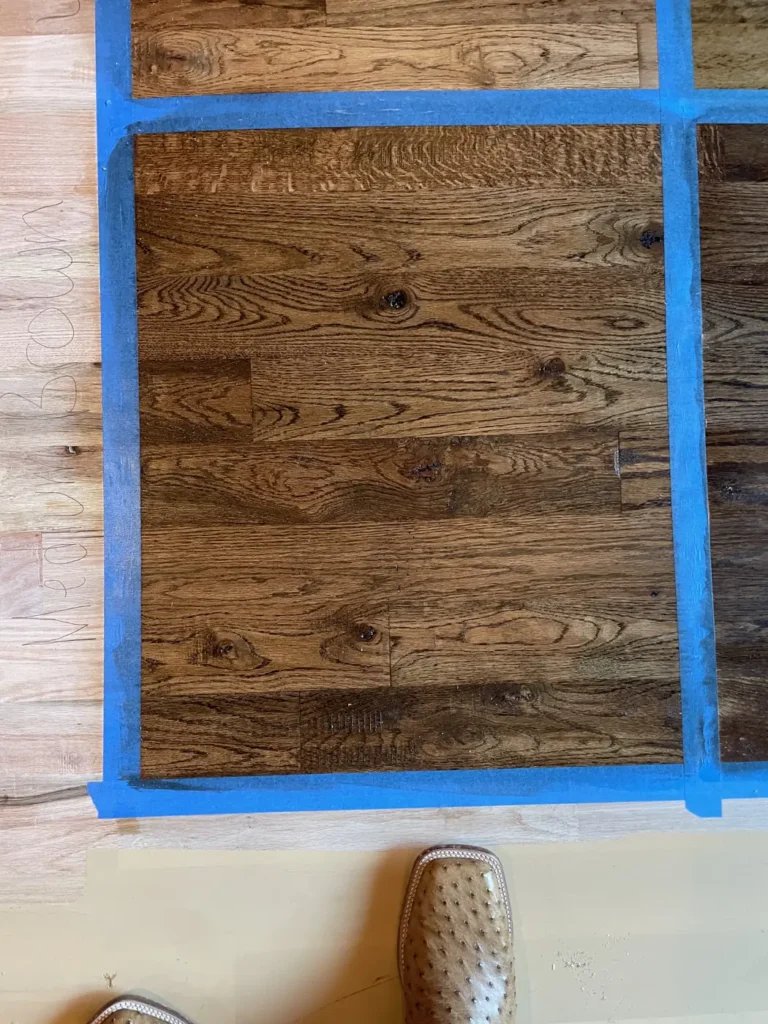
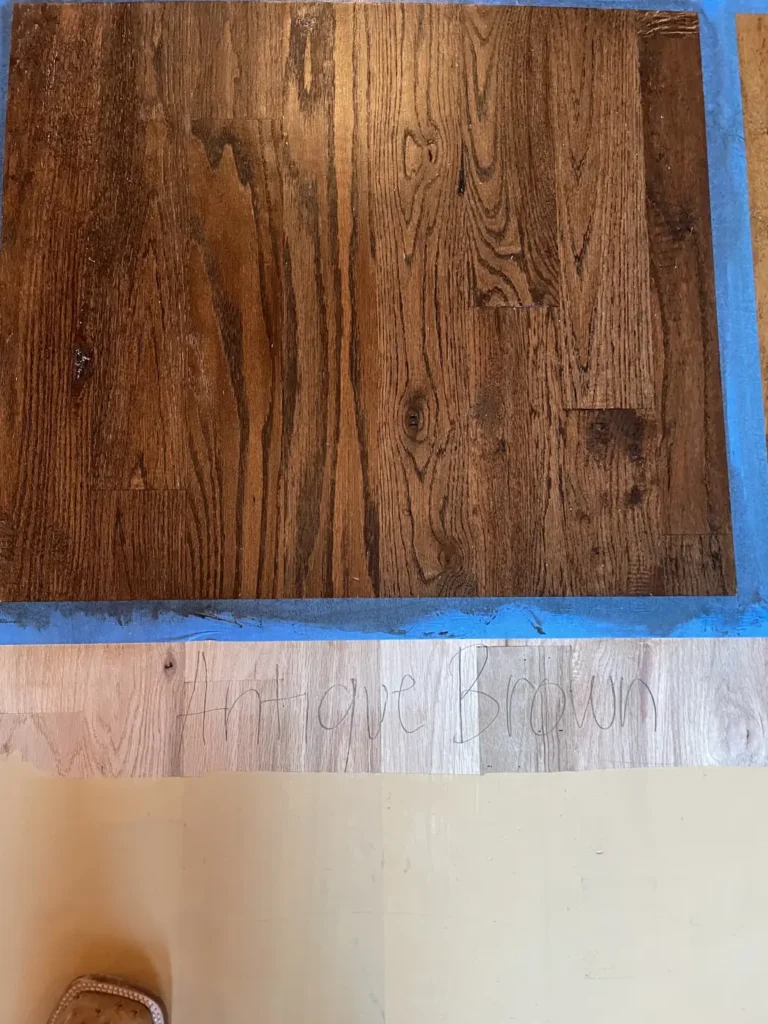
Stain never looks the same on a sample card as it does on your floor. Oak grain, the age of the wood and the light in your rooms all change the color. So we taped off squares on the sanded floor and put down several stain options side by side, so the homeowners could pick their color on their own floor, in their own light.
Refinish or replace?
If your hardwood is solid and the boards are still tight, refinishing is usually the better choice. It costs less than new flooring and keeps the original wood. Engineered floors with a thin top layer, or boards with deep water damage, may need replacing instead. We’ll check yours and tell you straight.
See our flooring services, our work in McKinney, or get a free quote.